
Last updated: November 04, 2026
Quick Answer: Water 1 to 3 times a week in many in-ground vegetable beds, but check soil moisture at 2 to 3 inches down first. In How to Water an Organic Vegetable Garden Efficiently, the goal is a deep soak on a steady schedule, then cutting waste with mulch, drip irrigation, or soaker hoses. The goal is not “more water”; it is water that reaches the root zone before heat and wind steal it.
Key takeaways
- Water less often, but make each watering soak the soil deeper.
- Morning watering usually loses less to evaporation than midday watering.
- Drip irrigation and soaker hoses put water where vegetables use it, not on paths.
- Mulch slows drying and keeps the soil surface from crusting over.
- Containers dry out faster than in-ground beds and need more frequent checks.
- The best schedule depends on heat, soil type, plant size, and wind.
What vegetable garden watering has to do first
Vegetable garden watering has to wet the root zone, not just the top inch of soil. A young lettuce plant in a loose bed and a full-grown tomato in heavy clay do not need the same amount or timing, so the first job is to know what kind of bed you are watering and how fast it dries.
Start by checking three things: soil type, plant size, and sun exposure. Sandy soil drains fast and often needs shorter, more frequent irrigation. Clay holds water longer and can go soggy if you water again too soon. Raised beds and containers dry faster than in-ground rows because they have more exposed sides. A bed in full sun or strong wind will dry faster than one under partial shade.
Look at the plants themselves before you turn on a hose. Wilting in the afternoon can be temporary, especially on hot days, but drooping that lasts into the evening usually means the root zone is too dry. Yellowing leaves, slow growth, and dry soil 2 to 3 inches below the surface are better clues than leaf color alone.
If the bed is mulched, pull the mulch back a little and check the soil under it. Mulch can hide a dry top layer while the soil below stays moist, which is why surface appearance alone can mislead you.
How to water an organic vegetable garden step by step
Water an organic vegetable garden by soaking the soil deeply, then waiting until the top few inches begin to dry before watering again. The order matters: check, water, wait, and adjust.
- Check the soil 2 to 3 inches down. Push a finger or hand trowel into the bed near the plants. If it feels cool and slightly moist, hold off. If it feels dry and crumbly, water now. This takes less than a minute and tells you more than the surface does.
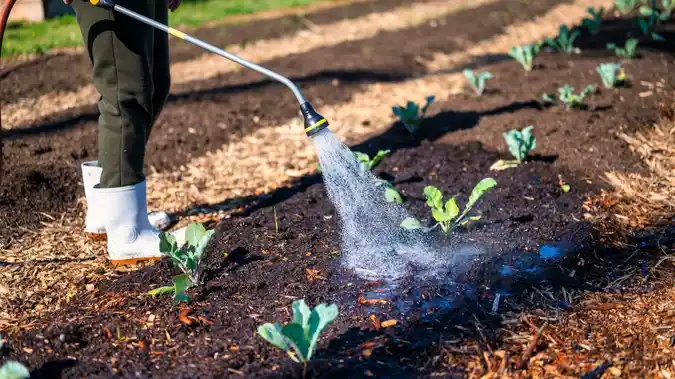
- Set up the right tool for the bed. Use a watering can for small patches, a hose with a gentle wand for spot watering, or drip irrigation and soaker hoses for long rows and beds. The result you want is water landing at the base of the plants, not splashing leaves and walking paths.
- Water slowly at the soil line. Give the bed a long, even soak so the water sinks down instead of running off. On compacted soil, pause once or twice during the watering so the surface can absorb it. You should see the topsoil darken evenly rather than puddle.
- Stop when moisture reaches deeper roots. For most vegetables, the aim is not a shallow sprinkle. Water until the soil is moist several inches down. In a container, that often means water runs from the drainage holes. In a bed, it means the soil feels evenly moist below the surface, not just on top.
- Recheck after a few hours on hot days. If the bed dries fast because of heat, wind, or sandy soil, a second lighter watering may be needed later in the day. If the soil still feels moist 2 to 3 inches down, skip it.
- Adjust the next watering by plant response. Healthy vegetables stand up with firm leaves and steady growth. If plants look limp by morning, shorten the interval between waterings. If the soil stays wet and plants slow down, water less often.
The simplest proof that this worked is a bed that stays evenly moist below the mulch and never swings between bone dry and muddy. That steady middle ground is easier on roots and usually more efficient than frequent splash watering.
Should I use drip irrigation or a hose with a watering wand?
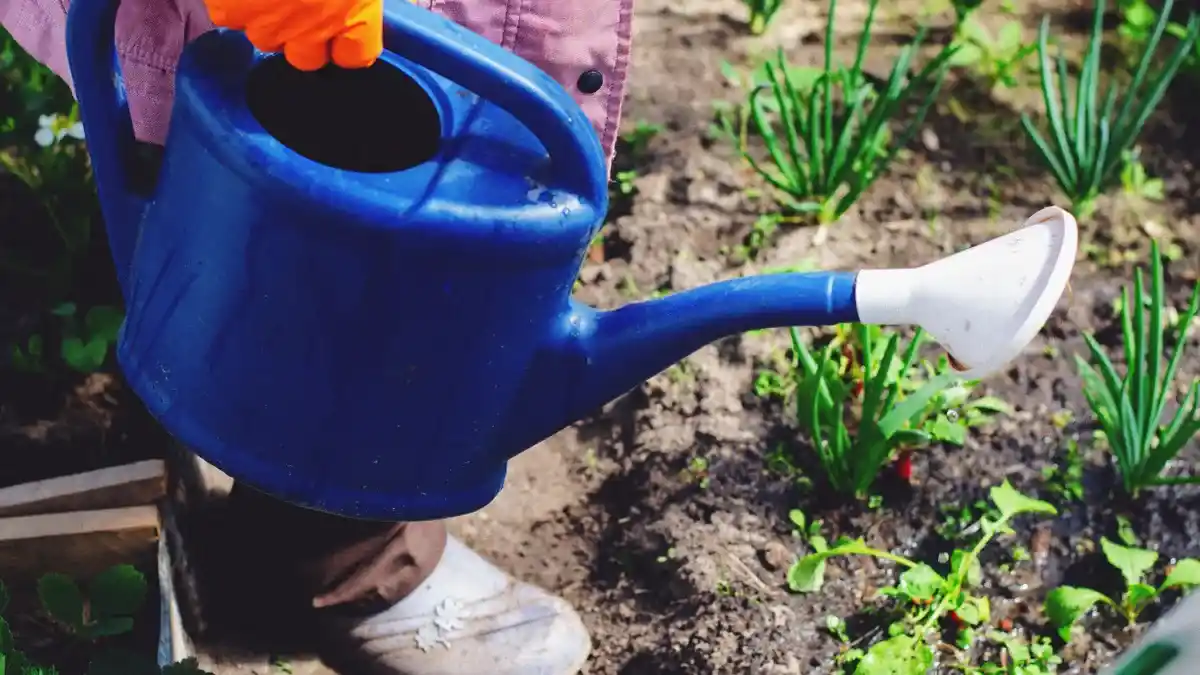
Drip irrigation is the most efficient choice for fixed vegetable beds, while a hose with a watering wand is better for small gardens, irregular layouts, and plants that change size through the season.
Drip irrigation and soaker hoses reduce waste because they put water right on the soil. That matters in an organic vegetable garden, where you want to keep foliage drier, limit evaporation, and avoid feeding weeds in the aisle. A hose wand can still work well if the garden is small or if you like to hand-check each plant, but it takes more time and discipline.
Drip systems are especially useful for tomatoes, peppers, squash, cucumbers, and beans because these crops benefit from steady moisture at the roots. Soaker hoses are simpler than emitters and often easier to lay through a row or raised bed, but they can wet unevenly if the pressure changes or the hose kinks. Drip tubing with emitters is more controlled, but it takes more setup.
A hose timer can help keep either system consistent. It is useful when you tend to forget a watering session or when weather swings fast. The trade-off is that a timer only follows the schedule you set. If the week turns cool and cloudy, an unchanged timer can water too much.
For a garden that changes shape every week or for a few pots scattered around a patio, this method is usually less convenient than a watering can or hose wand. In that case, a watering can or hose wand is faster and easier to move.
For a broader setup that supports the whole growing space, the hub on organic vegetable garden should sit alongside this page; the watering plan here fits into that larger system without repeating it.
How mulch changes the way you water
Mulch lowers how often you need to water by slowing evaporation and protecting the soil surface. That is one of the most useful water-saving moves in a vegetable bed, but mulch works best when it is paired with deep watering, not used as a substitute for it.
A 2- to 4-inch layer of organic mulch is common around vegetables. That thickness helps shade the soil, reduce splash, and keep the top layer from baking into a crust. Organic mulches such as straw, shredded leaves, or composted material break down over time, so they need topping up during the season. Keep mulch a little away from stems so the base of the plant does not stay damp against the stalk.
The benefit is practical: the soil holds moisture longer, which means fewer watering sessions and less stress during hot spells. The drawback is that mulch can hide a dry bed if you never check underneath it. A garden that looks moist on top may still need water below the surface, especially after several windy days.
Mulch also changes how water enters the soil. If the bed is already dry and hard, water may bead up or run off the surface of the mulch instead of soaking in. In that case, water slowly first, let it absorb, then return for a second pass if needed.
If weeds are already thick, mulch helps by blocking light. That saves water too, because weeds compete for moisture. A clean, mulched bed can often go longer between waterings than a bare bed in the same weather.
How often should I water vegetables in containers?
Containers usually need water more often than in-ground beds, sometimes every day in hot weather. The smaller the pot and the more sun it gets, the faster it dries out.
A container is a small reservoir with a lot of exposed surface, so it can dry out in a single warm afternoon. A 12-inch pot holding a tomato dries differently from a 5-gallon grow bag or a deep ceramic planter. Dark containers heat up faster than light ones, and hanging baskets dry even faster than floor pots.
Check container soil with a finger every day during hot weather. If the top 1 to 2 inches are dry, water slowly until liquid runs from the drainage holes. That runoff shows the entire root ball has been wetted. If the pot is very dry and water runs down the sides without soaking in, water in two passes a few minutes apart.
Use a watering can with a narrow spout or a hose wand on a low setting so the soil does not splash out. A mulch layer of shredded bark, compost, or straw can help containers too, though it is less forgiving than in a bed because the available soil volume is smaller.
Self-watering containers can reduce guesswork, but they still need checking. A reservoir that looks full does not tell you whether the root zone is actually using the water. For edible crops, especially tomatoes and peppers, consistent moisture matters more than occasional heavy soaking followed by dry spells.
The main limitation here is that containers are not forgiving of neglect. If you travel, set a hose timer, arrange help, or move some pots into partial shade.
Common watering mistakes that waste water and hurt crops
Overwatering, shallow watering, and spraying leaves are the biggest mistakes in vegetable garden watering. Each one costs the garden something different, and each one has a simple fix.
Shallow watering trains roots to stay near the surface. That makes plants more vulnerable when heat rises or you miss a day. The fix is to water longer but less often so moisture reaches deeper soil.
Watering on a fixed schedule without checking the soil can waste a lot of water. A cool, cloudy week does not demand the same watering as a windy 90-degree day. The fix is to treat the schedule as a starting point, then check soil moisture before you turn anything on. If you are unsure about your soil, local extension services or a certified irrigation professional can help you tune the schedule to your garden.
Spraying leaves instead of soil wastes water and can leave foliage wet longer than necessary. In an organic vegetable garden, wet leaves are not the goal. Water at the base, especially for tomatoes, squash, cucumbers, and peppers.
Ignoring soil type also causes trouble. Sandy beds need different timing than clay beds, and raised beds dry faster than ground-level rows. The fix is to learn how your own garden behaves after a normal watering and then adjust from there.
One more mistake is watering only the parts that look thirsty. Roots spread wider than the plant canopy in many vegetables, so a narrow splash at the stem can miss the active root zone. Water a little beyond the crown, especially for mature plants.
Two good references for watering logic are the University extension guides on vegetable watering and the general irrigation advice from the Royal Horticultural Society. The exact local timing still depends on your climate, soil, and crop mix.
How often should vegetable gardens be watered?
Vegetable gardens should be watered when the soil at root depth starts to dry, not on a fixed calendar alone. In hot, windy weather that may be every 1 to 3 days; in cooler or mulched beds, it may be less often. The better rule is to check 2 to 3 inches down and water only when that layer is drying.
Should I water vegetables in the morning or evening?
Morning is usually the better time to water vegetables. Morning watering gives leaves and soil time to dry and tends to lose less water to heat and wind than midday watering. Evening can work if morning is impossible, but wet foliage may stay damp longer overnight, so aim the water at the soil rather than the leaves.
How do I know if my plants need water?
Your plants need water when the soil is dry 2 to 3 inches down and the leaves start to lose firmness before evening. Wilting that disappears overnight may be heat stress, but limp plants the next morning usually need a deep watering. A dry, light-feeling pot or bed is another clear sign.
Drafted with AI; not yet reviewed by a person.