
The weeds in my garden were taking over, threatening to consume my prize-winning petunias. Armed with a rusty trowel and a blunt hand fork, I quickly realized I was fighting a losing battle. My back ached, and my progress was minimal. That’s when I understood the importance of having the right gardening tools and equipment UK. This guide will walk you through the essential tools, helping you choose the best equipment for your needs. You’ll learn what to look for, how to use these tools safely, and which ones are vital for various gardening tasks. This post will give you the confidence to tackle any gardening project and create a beautiful outdoor space. You’ll be able to make informed choices, saving money and improving your gardening experience.
Key Takeaways
- Understand the essential gardening tools for the gardening tools and equipment UK needs.
- Learn about different types of tools and their uses.
- Discover the best tools for specific gardening tasks like planting or pruning.
- Find out how to choose tools based on quality and your budget.
- Get tips on maintaining and storing your tools to extend their lifespan.
- Gain knowledge about the proper safety practices for using each tool.
Essential Tools for the UK Gardener
Every gardener, from the beginner to the expert, knows that the right tools make all the difference. Having the right gardening tools and equipment UK means less frustration, more efficiency, and a healthier, more beautiful garden. The tools you select depend on the size of your garden, the types of plants you cultivate, and the tasks you perform regularly. Whether you have a small balcony garden or a sprawling country estate, having these essentials will set you up for success. We’ll explore the must-have tools, offering insights into each one’s function and value, ensuring you’re ready for any gardening challenge.
Hand Tools: The Gardener’s First Friends
Hand tools are the foundation of any gardener’s toolkit. They are the tools you’ll use most frequently, directly engaging with the soil and plants. They come in various shapes and sizes, each serving a specific purpose. Choosing quality hand tools means looking for durability, comfortable grips, and construction materials that can withstand the rigors of gardening in the UK climate. These tools are often affordable, making them an excellent starting point for new gardeners. They are the tools you’ll grab for smaller jobs, allowing for precision work in tight spaces. Investing in durable hand tools is investing in your garden’s health and your own enjoyment of gardening.
- Trowel: A trowel is your go-to for planting seedlings, transplanting small plants, and digging in fertilizers.
- Hand Fork: Use a hand fork for breaking up soil, weeding, and mixing compost.
- Weeding Knife/Weeder: A weeding knife or weeder assists in removing weeds at the root, making it a garden essential.
- Hand Hoe: For surface weeding, the hand hoe is a fast tool to remove unwanted plants from your garden.
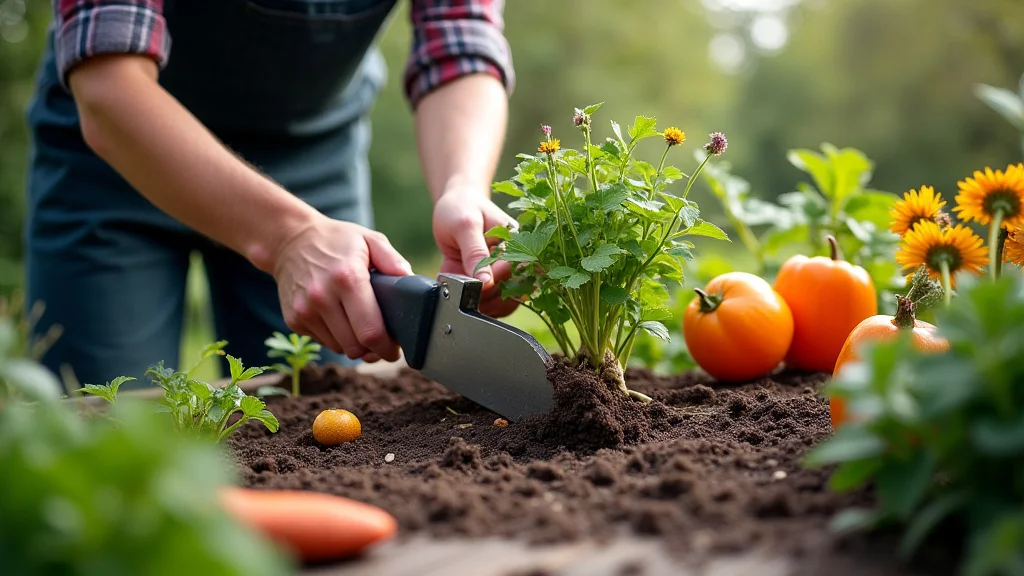
A trowel is a small, handheld tool with a curved, pointed blade, perfect for digging and scooping. It’s ideal for planting small plants, moving seedlings, and working with potting mix. A good trowel should be made from sturdy materials like stainless steel or forged steel to resist rust and wear. Ergonomic handles are another key feature, as they provide comfort and control during use. Look for a trowel with measurement markings if precision is important. It is used for tasks from planting bulbs to preparing the soil for bedding plants.
A hand fork is a small, three or four-pronged tool used for loosening soil, removing weeds, and mixing compost. It’s especially useful for working in tight spaces and around plant roots. Unlike larger forks used for turning over large areas, the hand fork allows for more controlled actions. Opt for a hand fork with strong tines and a comfortable handle, typically made from metal like stainless steel or carbon steel, to ensure durability and prevent bending. Hand forks are essential for maintaining soil structure and keeping your garden tidy.
A weeding knife or weeder is a specialized tool for precisely removing weeds, especially those with deep roots or growing in tight spots. It typically has a sharp, narrow blade designed to slice through the soil and sever the weed below the surface. This minimizes the chances of the weed regrowing. Look for weeding knives made from hardened steel for a sharp, long-lasting edge. Ergonomic handles provide grip and control, making the weeding process more comfortable and efficient. These are especially useful in the UK, where weeds thrive in the damp climate.
A hand hoe is a smaller version of a garden hoe, perfect for weeding and cultivating the soil. It typically has a sharp blade that can be used to chop weeds at the surface or scrape along the ground to loosen soil. Hand hoes are great for working in rows, and are light, and easy to use. Choose one made from steel or stainless steel, with a strong blade and comfortable handle. Regular use of a hand hoe helps prevent weeds from taking hold and keeps the garden looking tidy.
Digging Tools: Preparing the Soil
Digging tools are essential for preparing the soil for planting, turning over compost, and creating beds. These tools are the workhorses of the garden, allowing you to move large quantities of soil and amend it with nutrients and materials. Selecting the right digging tools for your garden involves understanding the types of soil you’re working with, the size of the area, and the tasks you plan to undertake. Good-quality digging tools are sturdy, durable, and ergonomically designed to minimize strain, making your gardening experience more comfortable. They are an important part of gardening tools and equipment UK collections.
- Spade: Used for digging, edging, and moving soil.
- Fork: The garden fork is designed for turning soil and compost.
- Border Spade: A smaller spade, great for edging and working in smaller spaces.
A spade is the most important tool for any gardener. It is used for digging, turning over soil, edging borders, and transplanting plants. Spades have a flat, straight blade and are designed for slicing into the ground. When choosing a spade, consider the handle length and the blade width. A longer handle will help reduce strain on your back, while a wider blade will make it easier to move large quantities of soil. A good quality spade is made of hardened steel and has a sturdy handle made of wood or composite materials.
A garden fork is another key digging tool with tines that are used to lift, turn, and aerate the soil. It’s perfect for breaking up compacted soil, mixing in compost or other amendments, and turning over compost heaps. Unlike a spade, which is designed for slicing, the fork is for lifting and aerating. The length and shape of the tines are vital. Longer tines reach deeper into the soil, and a curved handle provides better leverage. Look for a fork made of high-quality steel for durability. Using a fork helps improve soil drainage and keeps the soil healthy.
A border spade is a smaller, more maneuverable version of the standard spade. It has a narrower blade and a shorter handle, making it easier to use in tight spaces, flower beds, and borders. The border spade is ideal for edging lawns, transplanting smaller plants, and digging narrow trenches. Like the regular spade, a border spade should be made of durable materials with a comfortable handle. Its compact design also makes it easy to store.
Pruning and Cutting Tools: Shaping Your Garden
Pruning and cutting tools are essential for maintaining the health, shape, and appearance of your plants. These tools allow you to remove dead, diseased, or overgrown branches, which encourages new growth and flowering. From small shrubs to larger trees, proper pruning is essential. The right tools ensure clean cuts, preventing disease and promoting vigorous growth. These are crucial aspects of the gardening tools and equipment UK a gardener should have. Choosing quality pruning tools can save time and effort while keeping your plants healthy.
- Secateurs: For trimming small branches and stems.
- Loppers: Use loppers to prune larger branches.
- Pruning Saw: A pruning saw is helpful for cutting branches that are too large for loppers.
Secateurs, often called pruning shears, are hand-held tools for cutting small branches and stems. There are two main types: bypass secateurs, which have a curved blade that cuts against a flat anvil, and anvil secateurs, which have a single, straight blade that cuts against a flat surface. Bypass secateurs are best for making clean cuts on live wood, which promotes healing, while anvil secateurs are better for cutting dead wood. Consider the size of the branches and stems you typically prune when choosing a pair. Look for secateurs with sharp blades made of hardened steel and comfortable handles.
Loppers are long-handled pruning shears designed for cutting branches that are too large for secateurs. They provide extra leverage, making it easier to cut through thicker branches. There are two main types: bypass loppers, for live wood, and anvil loppers, for dead wood. Consider the maximum cutting capacity when choosing loppers to ensure they can handle the size of branches you’re likely to prune. Look for loppers with strong blades, comfortable grips, and durable handles. Loppers can make pruning tasks easier.
A pruning saw is designed for cutting larger branches that are beyond the capacity of loppers. These saws have coarse teeth, and curved blades, that help in cutting through wood. Consider the blade length, teeth configuration, and handle design when choosing a pruning saw. A folding pruning saw is a good choice for portability and storage. Pruning saws are essential tools for maintaining the health and structure of trees and shrubs in your garden, a standard aspect of gardening tools and equipment UK maintenance.
Watering and Irrigation Tools: Keeping Your Garden Hydrated
Proper watering is key to a flourishing garden, especially in drier periods. Choosing the right watering and irrigation tools can save you time, water, and effort. From simple watering cans to sophisticated irrigation systems, the right tools ensure that your plants receive the optimal amount of water to thrive. Considering the size of your garden, the types of plants, and your available water source will guide you in selecting the best watering solution. These tools are crucial components of gardening tools and equipment UK water management.
- Watering Can: A basic tool, perfect for watering smaller areas.
- Hose: For watering larger areas and providing water to hard to reach areas.
- Sprinkler: Sprinklers deliver water to larger areas.
- Irrigation System: For automated watering.
A watering can is a simple and effective tool for watering plants, especially in smaller gardens or for containers. It comes in various sizes and materials, such as plastic or galvanized steel. Choose a watering can that is comfortable to carry and has a rose or sprinkler head, as these help to distribute the water evenly. Look for a long spout to reach plants without stepping on them. A watering can is a practical choice for targeted watering.
A garden hose is an essential tool for watering lawns, flower beds, and larger areas of the garden. Hoses are available in various lengths, diameters, and materials. Choose a hose that is long enough to reach all areas of your garden, and consider a lightweight, flexible hose that’s easy to maneuver. Look for hoses made from durable materials like reinforced rubber or vinyl. A hose with a spray nozzle will offer various watering patterns.
Sprinklers are a great solution for efficiently watering lawns and larger garden areas. There are several types of sprinklers, including oscillating, rotary, and stationary sprinklers. Choose a sprinkler that suits the size and shape of your garden. Oscillating sprinklers are good for rectangular areas, while rotary sprinklers are suitable for circular coverage. Consider water pressure and coverage needs. A well-chosen sprinkler system ensures that all plants receive adequate moisture.
An irrigation system, also known as a drip or micro-irrigation system, provides a reliable and efficient way to water your plants. These systems deliver water directly to the plant roots, minimizing water waste and promoting healthy growth. They often consist of a network of pipes, emitters, and a timer. Choose a system that fits the size and layout of your garden. An irrigation system can be a great investment for long-term water conservation and garden health.
Soil Preparation and Maintenance: Building Healthy Soil
Healthy soil is the foundation of a thriving garden, and the right tools make soil preparation and maintenance easier and more effective. This involves processes like aerating, amending, and improving soil structure. Whether you’re working with clay soil, sandy soil, or anything in between, these tools will help you create an environment where plants can thrive. The correct preparation means the difference between a productive garden and one that struggles to produce the plants you want to see. This also involves the right kind of gardening tools and equipment UK.
- Rake: For leveling soil, removing debris, and collecting leaves.
- Hoe: Used to cultivate soil, remove weeds, and prepare planting beds.
- Soil Aerator: For improving soil drainage and aeration.
A rake is a versatile tool used for various soil preparation tasks, including leveling soil, removing debris like stones and weeds, and spreading mulch. There are different types of rakes: leaf rakes have flexible tines for collecting leaves, and garden rakes have strong, rigid tines for working the soil. Consider the size of your garden and the type of tasks you perform when choosing a rake. Rakes are vital for maintaining a neat and productive garden. It is an indispensable part of gardening tools and equipment UK maintenance.
A hoe is a long-handled tool with a flat blade used for cultivating soil, removing weeds, and preparing planting beds. There are different types of hoes, including the draw hoe, which is pulled toward the user, and the push-pull hoe, which works in both directions. Consider the size of your garden and the specific tasks you’ll be doing when choosing a hoe. Regular use of a hoe helps maintain healthy soil and control weeds. They are a good addition to any gardening tools and equipment UK arsenal.
A soil aerator is a tool designed to improve soil drainage and aeration. It does this by creating small holes in the soil, allowing air, water, and nutrients to reach the plant roots more easily. There are different types of aerators, including core aerators, which remove small cores of soil, and spike aerators, which simply poke holes in the soil. Soil aerators are particularly useful for compacted soils and help promote healthy root growth. Soil aerators are vital for maintaining soil health.
Choosing Quality Over Cost
When selecting gardening tools and equipment UK, quality is important. While the initial investment might be higher, quality tools will last longer, perform better, and offer a more satisfying gardening experience. They are worth the money. Durability, comfort, and the materials used are three important aspects. Consider the types of gardening tasks you do most often. The best tools will enhance your gardening experience and reduce the need for constant replacements. They’ll also be more efficient, saving time and energy.
- Durability: Select tools built to withstand the rigors of gardening.
- Comfort: Consider the handle design and weight of the tools.
- Materials: Tools made from high-quality materials will last longer.
Durability is key when choosing gardening tools. Look for tools made from high-quality materials, such as hardened steel for blades and strong, weather-resistant handles. Consider the construction method and the overall design. Sturdy tools will be able to handle the wear and tear of regular use. Properly maintained tools will provide years of reliable service, making them a good investment.
Comfort is essential, especially if you spend a lot of time in your garden. Look for tools with ergonomic handles and comfortable grips that fit your hands well. Padding on handles can reduce strain on your hands and wrists, making the gardening experience more comfortable. The weight of the tool is also important; choose lightweight tools to reduce fatigue. Ergonomic tools mean more comfortable gardening sessions.
The materials used in the construction of gardening tools greatly impact their durability and performance. Stainless steel and forged carbon steel are good choices for blades because they resist rust and maintain a sharp edge. Wooden handles, particularly those made from hardwoods, are comfortable and can absorb shock. Composite materials can also be durable and weather-resistant. Choosing tools made from quality materials ensures longevity and reliability.
Safety First: How to Use Your Tools Safely
Safety should always be a top priority when using gardening tools. Following proper safety practices will keep you safe from injuries. Always check the condition of your tools. Sharp tools are more effective but also pose a greater risk of injury. Never leave tools lying around where someone could trip or get injured. Proper safety practices ensure a pleasurable and safe gardening experience. The right safety practices are an important part of any guide about gardening tools and equipment UK.
- Protective Gear: Wear appropriate safety gear.
- Tool Maintenance: Keep your tools sharp and in good condition.
- Proper Techniques: Use the right techniques.
Always wear safety gear when gardening. This includes gloves to protect your hands, safety glasses to protect your eyes, and sturdy shoes to protect your feet. Long sleeves and pants can protect your skin from cuts and scratches. A hat can protect your head from the sun. Using the right gear is key for safe and comfortable gardening.
Maintaining your tools is essential for safety and efficiency. Sharpen blades regularly using a sharpening tool. Inspect tools for damage, such as loose handles or cracked blades, before each use. Regularly clean and lubricate tools to prevent rust and ensure smooth operation. Well-maintained tools are safer to use and will perform better.
Use proper techniques when using gardening tools. Always hold tools with a firm grip and stand in a stable position. Be aware of your surroundings and avoid swinging tools near other people or objects. When pruning, cut away from your body. Read and follow the manufacturer’s instructions for each tool. Taking the time to understand the correct techniques ensures a safe and effective gardening experience.
Storing and Maintaining Your Tools
Proper storage and maintenance are essential for extending the life of your gardening tools and equipment UK. Clean and dry your tools after each use. A well-organized storage space will make it easy to find what you need. Regular cleaning, sharpening, and lubrication will ensure that your tools remain in top condition, ready for your next gardening session. Taking care of your tools saves money, as you won’t need to replace them as often.
- Cleaning: Clean tools after each use to remove dirt and debris.
- Sharpening: Keep blades sharp for efficient and safe use.
- Storage: Store your tools in a dry, organized place.
Cleaning your gardening tools is essential to prevent rust, corrosion, and the spread of diseases. After each use, wipe down tools with a damp cloth or brush to remove soil, sap, and other debris. For more stubborn dirt, use a mild soap and water solution. Thoroughly dry the tools to prevent rust. Regular cleaning keeps your tools in great shape.
Sharpening your tools, particularly blades, is critical for both safety and effectiveness. Dull tools require more effort and can be more dangerous to use. Use a sharpening stone or file to sharpen blades, following the manufacturer’s instructions. Sharpen secateurs, loppers, and pruning saws regularly. Keep sharp blades. This will make your gardening tasks easier and safer.
Proper storage is essential for protecting your tools and keeping them in good condition. Store tools in a dry place, such as a shed, garage, or storage container. Hang tools on a wall or store them in a tool rack to keep them organized and easy to access. Store tools with sharp edges safely away from children and pets. Proper storage extends the lifespan of your tools and saves space.
Frequently Asked Questions
Question: What are the essential hand tools for a beginner gardener?
Answer: A trowel, hand fork, weeding knife, and hand hoe are the essential hand tools for any beginner. These tools cover basic tasks like planting, weeding, and soil preparation.
Question: How do I choose the right size of secateurs?
Answer: Consider the size of the branches you will be pruning. Bypass secateurs are for fresh, green wood, and anvil secateurs are better for deadwood. Select secateurs that fit comfortably in your hand.
Question: How often should I sharpen my pruning saw?
Answer: Sharpen your pruning saw after every few uses or when you notice it’s becoming difficult to cut through branches. Regular sharpening ensures efficient and safe cutting.
Question: What type of watering system is best for a small garden?
Answer: A watering can or a small hose with a spray nozzle works well for a small garden. For more efficient watering, consider a soaker hose or a basic drip irrigation system.
Question: How do I remove rust from my garden tools?
Answer: Use steel wool, sandpaper, or a rust remover product to remove rust. After removing the rust, clean and dry the tool, then apply a protective coating, such as oil, to prevent future corrosion.
Final Thoughts
Having the right gardening tools and equipment UK can transform your gardening experience, making it more efficient, enjoyable, and rewarding. The tools mentioned above will serve you well, making your gardening work easier and more successful. By understanding the function of each tool, selecting quality equipment, and practicing safe usage and maintenance, you’ll be well-prepared to face any gardening task. You now have the knowledge to create a flourishing and attractive garden, whether it’s a small balcony or a spacious yard. Take the plunge, choose your tools wisely, and embrace the joy of gardening!