
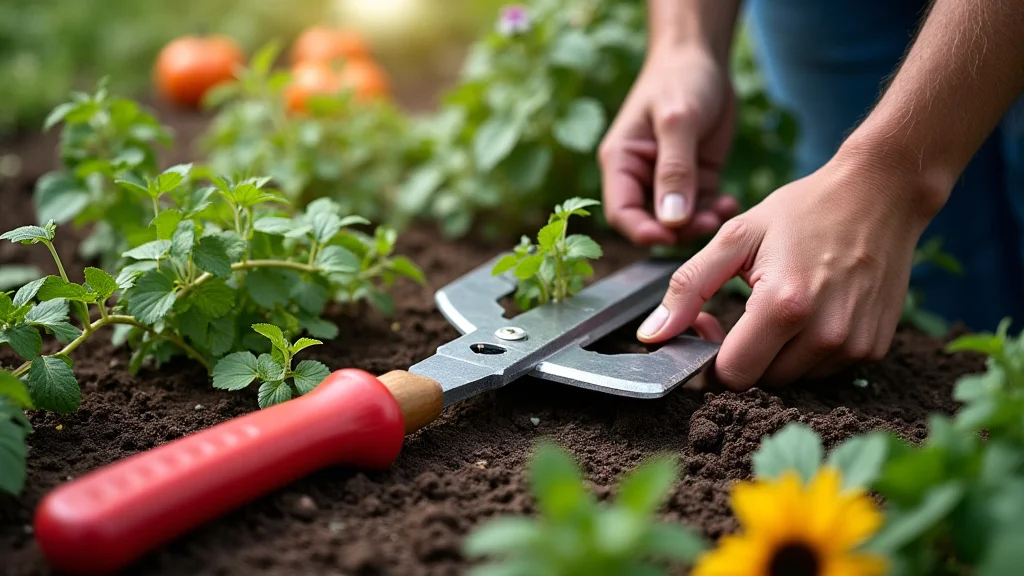
Remember that time you tried to plant a rose bush with a spoon? It didn’t go well, right? We’ve all been there. Trying to garden without the right tools is like trying to build a house with only a hammer – you’ll get frustrated quickly! This guide breaks down the essential gardening tools names, making sure you know what to use and when. You’ll learn about everything from the basics to some specialized items. By the end, you’ll be able to confidently choose the right equipment, making your gardening experience much smoother and more enjoyable. Get ready to explore the world of gardening with confidence.
Key Takeaways
- Identify essential gardening tools names for various tasks.
- Learn the purpose of each tool and how to use it safely.
- Discover how to choose the right tools for your garden’s size and needs.
- Understand the different materials tools are made of and their benefits.
- Explore the various tool types and their specific applications.
- Gain knowledge on maintaining and storing your gardening tools.
Essential Gardening Tools and Their Uses
Starting a garden can be exciting, but it’s important to have the right gear. Choosing the correct gardening tools names and knowing their use can make gardening a lot easier and more enjoyable. From preparing the soil to harvesting your bounty, each tool plays a part. Let’s explore the essential tools needed for beginners and experienced gardeners alike.
Hand Tools for Basic Gardening
Hand tools are small, portable, and ideal for smaller gardens or detailed tasks. They give you more control and are great for close work. These are the tools you’ll use frequently, so it’s a good idea to invest in some quality pieces. These tools are the foundation of any gardener’s collection. They allow for precision and control in various tasks.
-
Trowel: The trowel is a small, hand-held tool with a curved blade and pointed tip.
The primary use of a trowel is to dig small holes for planting seedlings, transplanting plants, and scooping soil. The pointed tip is perfect for breaking up compacted soil and making space for delicate roots. Additionally, a trowel is handy for weeding around plants and applying fertilizer. Trowels come in various sizes and materials, usually with a wooden handle for comfort and grip. Choose one with a sturdy blade to handle diverse soil conditions.
-
Hand Fork: A small, three or four-pronged tool for loosening soil.
A hand fork is a small, handheld tool that looks like a miniature garden fork. Its main use is to loosen the soil in small areas, such as flower beds or vegetable patches. It’s excellent for breaking up clods, mixing in compost, and aerating the soil to improve drainage and nutrient absorption. The prongs are designed to dig into the ground gently, avoiding damage to plant roots. Hand forks are also handy for weeding and removing small rocks or debris.
-
Hand Rake: A small rake used for smoothing soil and removing debris.
A hand rake is a small version of a larger rake, designed for tasks such as smoothing the soil surface, removing small debris like leaves and twigs, and preparing the seedbed. The small size makes it easy to maneuver in tight spaces, such as raised beds or between plants. This tool’s small teeth gently loosen and level the soil, and it can also be used to mix in soil amendments, ensuring everything is well distributed.
Tools for Soil Preparation
Preparing the soil correctly is the key to healthy plant growth. These tools are designed to till, cultivate, and improve soil. Proper soil preparation ensures your plants have the nutrients and conditions they need to thrive. Let’s review the implements for this important task.
-
Garden Fork: A large fork for turning and aerating soil.
A garden fork is larger than a hand fork and is used to turn over soil, aerate it, and mix in compost or other amendments. It has sturdy tines that can penetrate the soil easily. Using a garden fork before planting helps improve drainage and root growth, especially in compacted soil. It is also excellent for breaking up clumps of soil and removing weeds, and is often used in raised beds or larger garden areas. The long handle reduces strain.
-
Spade: A flat-bladed tool for digging and turning soil.
A spade is a flat-bladed tool, ideal for digging, edging, and moving soil. It’s used for various tasks, including creating garden beds, digging trenches, and transplanting plants. The flat blade makes it useful for cutting through roots and sod. When purchasing a spade, consider the blade material and handle type. Carbon steel blades are durable. A good spade will make digging and soil preparation much more manageable.
-
Hoe: Used for weeding, cultivating, and creating furrows.
A hoe is a long-handled tool with a flat or curved blade used for weeding, soil cultivation, and creating furrows for planting. It is often used to chop weeds at the soil surface and is effective at breaking up the top layer of soil, which prevents weed growth. There are different types of hoes, each with a different blade shape, that offer various uses. The blade allows you to push or pull the hoe, depending on the task. A hoe is particularly useful in vegetable gardens.
Watering Tools for Hydration
Water is essential for plant life, and having proper watering tools is essential. Ensuring your plants receive the right amount of water is crucial. These tools make the watering process simple and effective.
-
Watering Can: A container with a rose head for gentle watering.
A watering can is a simple container with a spout, often featuring a rose head (a sprinkler head), to water plants gently. This is especially good for seedlings and delicate plants to avoid damage. Watering cans come in different sizes, from small ones for indoor plants to larger ones for outdoor use. The rose head disperses the water evenly. It is also excellent for container gardening and spots where a hose might not be easily accessible.
-
Garden Hose: Used for watering large areas.
A garden hose is used for watering larger areas. Garden hoses come in various lengths and materials, and you can attach spray nozzles to control the water flow. Hoses can be connected to sprinklers or used to manually water plants, trees, and lawns. Choose a hose that is durable and resistant to kinking. Consider the hose length and flexibility. Hoses are convenient for keeping gardens well-hydrated.
-
Sprinkler: Used for automated watering of lawns and gardens.
Sprinklers are devices used to distribute water over a lawn or garden area automatically. They come in various types, including oscillating, rotary, and impact sprinklers, each providing different coverage patterns. Sprinklers are useful for watering large areas and can be connected to timers for efficient and consistent watering. This helps in conserving water. When purchasing a sprinkler, consider your garden size and plant needs. This will help you select the most appropriate type and pattern.
Specialized Gardening Tools and Equipment
Beyond the basics, several tools can make gardening easier and more efficient. These tools cater to specific tasks, such as pruning, harvesting, and pest control. Investing in these items can significantly enhance your gardening experience.
Tools for Pruning and Trimming
Pruning is essential for plant health and appearance. The right tools help to shape plants, remove dead or diseased branches, and encourage growth. Here are some of the specialized tools for pruning tasks.
-
Pruning Shears: Used for cutting small branches and stems.
Pruning shears, also known as hand pruners or secateurs, are used to cut smaller branches, stems, and flowers. They are ideal for precise cuts and shaping shrubs, roses, and other plants. Pruning shears come in two main types: bypass and anvil. Bypass shears make clean cuts, while anvil shears are more robust and suited for deadwood. Choosing shears depends on the size and type of the stems you’ll be cutting. Always keep shears sharp.
-
Loppers: Used for cutting thicker branches.
Loppers are long-handled pruning tools used for cutting thicker branches that pruning shears cannot handle. Their longer handles provide additional leverage, making it easier to cut through wood. Loppers come in bypass and anvil styles. Bypass loppers are typically preferred for clean cuts, while anvil loppers are often more durable. They are useful for pruning shrubs, small trees, and fruit trees, helping to promote plant health and appearance. Choose loppers based on the maximum branch diameter.
-
Pruning Saw: Used for removing larger branches.
A pruning saw is designed for cutting larger branches that loppers cannot manage. It typically features a curved or straight blade with sharp teeth. Pruning saws are used to remove dead or diseased branches, shape trees, and maintain the overall health of your plants. When using a pruning saw, make sure you know the proper techniques to avoid damaging the tree. Using a sharp saw is important to make clean cuts. Always wear safety goggles.
Tools for Harvesting and Gathering
Harvesting tools make the process of gathering your crops much easier and more efficient. These tools help to collect your harvest with minimal effort.
-
Harvesting Knife: Used for cutting vegetables and fruits.
A harvesting knife is a small, sharp knife used to cut vegetables and fruits from plants. Its curved or pointed blade is useful for slicing through stems and harvesting produce. Harvesting knives are essential for harvesting tomatoes, cucumbers, and other vegetables. They help to minimize damage to the plant and the fruit. Choose a knife with a comfortable handle and a blade that is easy to sharpen. Properly store your knife.
-
Garden Cart/Wheelbarrow: Used for transporting tools, soil, and plants.
A garden cart or wheelbarrow is used for transporting tools, soil, compost, plants, and other materials around the garden. They reduce the amount of physical labor required to move heavy items. Wheelbarrows usually have a single wheel, while garden carts may have two or four wheels. Carts are often easier to maneuver on uneven surfaces. Choose a cart or wheelbarrow appropriate for the size of your garden and the typical loads you’ll be moving.
-
Harvesting Basket: Used for gathering harvested produce.
A harvesting basket is used to collect and carry harvested fruits, vegetables, and flowers. They can be made from various materials, including wicker, mesh, or plastic, and are designed to allow air circulation. This prevents produce from getting bruised or damaged. Harvesting baskets come in different sizes to accommodate various harvest amounts. Choose a basket that is easy to carry and clean and suitable for the type of produce you’re harvesting.
Choosing the Right Tools for Your Garden
Choosing the correct gardening tools names and tools depends on your garden’s size, the type of plants you are growing, and your personal preferences. Assess your needs and then select tools that are appropriate for the tasks. This ensures you make the right investment.
Consider Garden Size
The size of your garden directly influences the type of tools you will need. A small urban garden will require fewer and smaller tools. In contrast, a larger garden or allotment requires more extensive equipment. Choosing the right tool size can significantly improve the efficiency of your gardening tasks.
-
Small Garden: Hand tools and a small watering can or hose are usually sufficient.
For a small garden, hand tools like a trowel, hand fork, and small hand rake will suffice. A small watering can or a short hose is enough. Compact tools are easier to store and maneuver. A small garden may not require heavy-duty tools.
-
Medium Garden: Consider a garden fork, spade, and a longer hose.
In a medium-sized garden, you’ll need a garden fork and a spade. A longer hose will likely be required. You may also want a wheelbarrow or a garden cart for transporting materials.
-
Large Garden: A hoe, wheelbarrow, and possibly power tools may be required.
A large garden may benefit from a hoe for weeding, a wheelbarrow for moving materials, and potentially some power tools like a tiller or a hedge trimmer. A good watering system, like a sprinkler, is important in large gardens. You may also need a variety of pruning tools.
Matching Tools to Plant Types
The types of plants you plan to grow will also impact your tool selection. Different plants have different needs, which require various tools. Tailoring your selection to your plant types ensures efficient and effective gardening.
-
Vegetable Garden: Hoes, shovels, and harvesting tools are key.
Vegetable gardens typically require a hoe for weeding and preparing rows. A shovel is useful for digging and moving soil. Harvesting knives and baskets are essential. Consider a garden fork for turning the soil. Having the right tools supports the cultivation of vegetables.
-
Flower Beds: Pruning shears and trowels are useful.
Flower beds may require pruning shears for shaping plants and removing dead flowers. A trowel and hand fork are used for planting and weeding. A small rake can help smooth the soil surface. This focuses on detail-oriented tasks.
-
Trees and Shrubs: Loppers, pruning saws, and watering equipment are needed.
For trees and shrubs, you’ll need loppers for cutting larger branches and a pruning saw. A sturdy hose is crucial for providing adequate water. Always assess the needs of each plant type. Using the right tools leads to plant health.
Choosing Tool Materials
The materials that gardening tools are made of can significantly impact their durability, performance, and longevity. The best materials offer a balance of strength, corrosion resistance, and user comfort. Consider the pros and cons of different materials before making a purchase.
-
Steel: Strong and durable, but can rust.
Steel tools are robust and can withstand heavy use. They are durable for most gardening tasks. However, steel tools can rust, so it is necessary to maintain them properly and store them in dry conditions. High-carbon steel is especially strong. Stainless steel offers better resistance to rust. Steel is a popular choice for spades, forks, and hoes because of its strength.
-
Aluminum: Lightweight and rust-resistant, but can bend.
Aluminum tools are lightweight and resistant to rust. This makes them easy to handle, especially for extended use. Aluminum, however, can bend. Aluminum tools are suitable for light gardening tasks, such as hand rakes and trowels. When choosing aluminum tools, look for reinforced designs for greater durability.
-
Wood: Traditional and comfortable, but requires maintenance.
Wood handles are traditional and provide a comfortable grip. Wood absorbs shock, and a well-made wooden handle can last a long time. Wood handles require maintenance, such as occasional oiling, to prevent them from drying out or splitting. Wood handles are commonly found on spades, shovels, and rakes. Wood handles add a traditional aesthetic appeal.
-
Plastic: Lightweight and rust-proof, but less durable.
Plastic tools are lightweight and rust-proof, making them easy to maintain. Plastic tools tend to be less durable than steel or aluminum tools. The quality of plastic can vary. When selecting plastic tools, look for ones made from high-quality, durable materials. Plastic tools are a good choice for smaller tasks. They can be found in hand trowels and watering cans.
Gardening Tool Maintenance and Storage
Proper maintenance and storage of your gardening tools ensures their longevity and performance. Keeping tools clean, sharp, and stored correctly will extend their life and make your gardening tasks much easier. Maintenance is critical for keeping tools in top shape and ready to use.
Cleaning and Sharpening
Regular cleaning and sharpening of your gardening tools are crucial. They keep the tools in good working order and increase efficiency. Cleaning and sharpening also extend the life of your equipment.
-
Cleaning: Remove dirt and debris after each use.
After each use, clean your tools to remove dirt, soil, and plant residue. Use a wire brush or scraper to remove debris from blades and tines. Rinse the tools with water and dry them thoroughly to prevent rust. Proper cleaning stops the spread of plant diseases. This also keeps the tools working well.
-
Sharpening: Sharpen blades regularly to maintain cutting efficiency.
Sharpen blades regularly to maintain cutting efficiency. Use a file or sharpening stone to sharpen the blades of pruning shears, loppers, and knives. Sharpening blades improves cutting efficiency and reduces plant damage. Follow the manufacturer’s instructions. A sharp blade makes for a cleaner cut. This also reduces the strain on the tools and your arms.
-
Oiling: Apply oil to prevent rust and ensure smooth operation.
Apply oil to prevent rust and ensure smooth operation of moving parts. Oil the blades and pivot points of pruning shears, loppers, and other tools. This reduces friction and makes the tools easier to use. Apply oil after cleaning and sharpening your tools. Proper lubrication helps keep them in good working order.
Storage Solutions
Proper storage is essential to protect your tools from the elements and keep them organized. A well-organized storage system will keep your tools safe. It will also make them easier to find and use.
-
Tool Rack: Store tools on a rack to keep them organized.
A tool rack is a simple and effective storage solution. A tool rack will help to organize your tools and prevent them from cluttering the garden. Tool racks can be freestanding or wall-mounted. Make sure to choose a tool rack that suits the size and number of tools you own. Storing your tools on a rack prevents them from becoming damaged.
-
Shed or Garage: Store tools indoors to protect them from weather.
Storing your tools inside a shed or garage protects them from weather elements. This helps prevent rust and other damage. If you do not have a shed or garage, consider a weatherproof storage container. It can be a simple shed or a more sophisticated tool storage unit. Keeping your tools in a dry area extends their life.
-
Hanging Tools: Hang tools to save space and keep them accessible.
Hanging tools is a great way to save space and keep them accessible. Use hooks or pegboards to hang tools on a wall. This also makes them easy to find and use. Make sure the hanging system is sturdy enough to hold the weight of your tools. A well-organized hanging system improves efficiency.
Frequently Asked Questions
Question: What’s the most important tool for a beginner gardener?
Answer: A good trowel is often considered the most important tool for a beginner. It’s versatile, useful for digging, planting, and weeding.
Question: How often should I sharpen my pruning shears?
Answer: Sharpen your pruning shears after every few uses or when you notice they are no longer making clean cuts. This improves cutting efficiency and protects plant health.
Question: What is the best way to clean rusty tools?
Answer: You can remove rust from tools with a wire brush, sandpaper, or by soaking them in vinegar overnight. After removing the rust, dry and oil the tools to protect them from future corrosion.
Question: Are wooden-handled tools better than metal-handled tools?
Answer: Wooden handles provide comfort and shock absorption. Metal handles are very durable. The “best” depends on personal preference and the tasks for which you are using the tools.
Question: What’s the best way to store my garden hose?
Answer: Properly store your garden hose on a hose reel or rack. This will prevent kinks and damage.
Final Thoughts
Now that you’ve explored the world of gardening tools names, you’re well-equipped to start or expand your gardening endeavors. From hand tools for delicate tasks to larger equipment for soil preparation, having the right gear is essential. Remember to consider your garden’s size and plant types when making your selections. Regular maintenance, including cleaning, sharpening, and proper storage, will extend the life of your tools, making your gardening experience more enjoyable for years to come. Don’t be afraid to experiment and discover which tools work best for you. Happy gardening!