
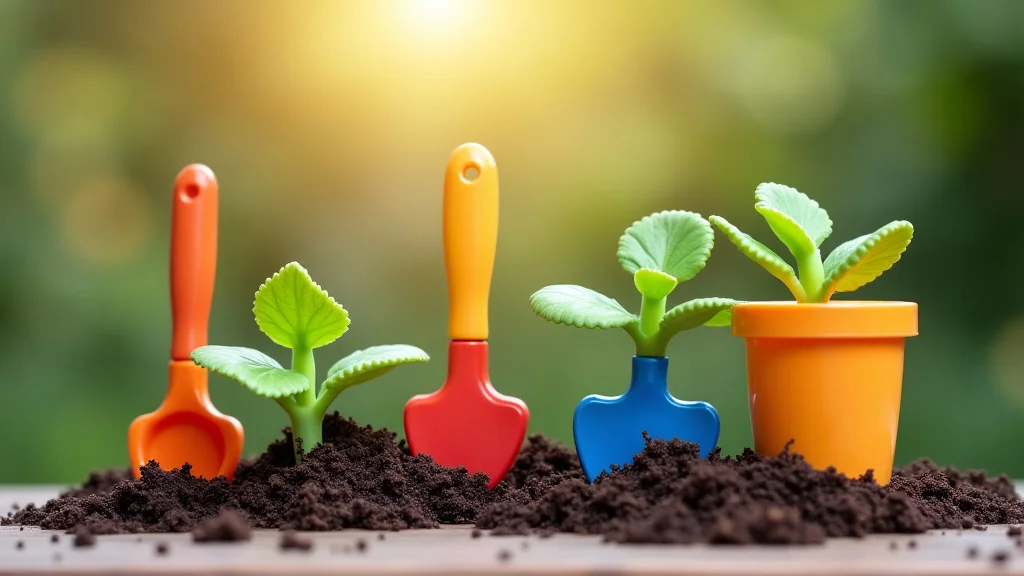
Remember that time you tried to help Mom plant flowers, and all you had was a tiny spoon? Or perhaps you recall the struggles with a too-big shovel? That’s where toy gardening tools come in! They are the perfect way for kids to experience the joy of gardening without the frustration of using tools that are too big or awkward. This post explores the benefits of toy gardening tools, helping you select the best ones for your young gardeners and teaching you how to make gardening a fun, educational activity. You’ll learn the importance of safety, the variety of tools available, and how to create a garden experience that fosters a love for nature. By the end, you will be prepared to inspire the next generation of gardeners.
Key Takeaways
- Toy gardening tools provide a safe and age-appropriate way for kids to learn about gardening.
- Choosing the right tools, considering size and materials, is vital for the child’s experience.
- Gardening with toys offers opportunities to develop life skills, from responsibility to scientific observation.
- Kids’ gardening can be adapted to any space, from tiny pots on a balcony to a larger garden plot.
- Selecting the right gardening activities is important for engaging children’s interest.
- Toy tools can foster a love for nature and encourage healthy habits.
The Value of Toy Gardening Tools for Budding Gardeners
Imagine your child’s face lighting up with excitement as they discover the wonders of growing plants. That excitement is multiplied when they have tools sized perfectly for their little hands. Using toy gardening tools helps children develop a genuine interest in nature, teaching them the basics of plant care. They get to experience the entire process, from planting seeds to harvesting fruits or vegetables, all while learning valuable life lessons. The right tools encourage independence, improve fine motor skills, and instill a sense of responsibility as they care for their own little garden. This hands-on approach builds confidence and a positive association with outdoor activities.
Safety First: Selecting Safe Toy Gardening Tools
Safety is the primary consideration when choosing toy gardening tools. Look for tools made from durable, non-toxic materials. Rounded edges and blunt tips are essential to avoid injuries. Tools should be lightweight and easy for children to manage independently. Proper adult supervision is always necessary, especially when working with tools that might pose a risk. Teach children to handle the tools carefully and to store them safely away from others. By prioritizing safety, you create a worry-free environment where kids can enjoy the fun of gardening.
- Material Matters: Opt for tools made of plastic, wood, or metal that are not likely to splinter, break easily, or corrode. Inspect them regularly for any signs of damage.
- Ergonomic Design: Tools with handles sized to fit small hands, promoting a comfortable and effective grip.
- Protective Gear: Consider kid-sized gardening gloves and safety glasses. Teach them how to use this gear and why it is important.
- Supervision Always: Never leave children unsupervised when using any gardening tool, no matter how safe it appears.
A report from the National Safety Council indicates that approximately 22,000 children are injured by gardening tools each year. Selecting the right tools and providing proper supervision can significantly reduce the risk of injury.
Types of Toy Gardening Tools and Their Uses
The market provides a wide variety of toy gardening tools, each designed for specific gardening tasks. Understanding which tools are available will allow you to pick the best set for your child. Some tools are perfect for planting while others will help with weeding, and some with harvesting. Having a range of tools adds versatility to the gardening experience and allows kids to participate in many aspects of the gardening process. The right selection helps children to develop specific skills and engage with different aspects of gardening.
- Hand Trowel: This small shovel is ideal for digging small holes, transplanting seedlings, and scooping soil.
- Hand Rake: Perfect for leveling soil, gathering leaves, and removing debris.
- Hand Fork: Useful for loosening soil, mixing in compost, and weeding.
- Watering Can: A classic tool for watering plants, teaching children about the importance of hydration.
- Gardening Gloves: Protecting hands from dirt, thorns, and potential irritants.
- Small Shovel: Used to move larger amounts of soil and mulch.
A recent study by the American Horticultural Society indicates that children who participate in gardening activities demonstrate improved fine motor skills and increased curiosity about nature.
Building a Successful Gardening Experience for Kids
Gardening with kids requires careful planning to ensure it is both enjoyable and educational. Start by choosing easy-to-grow plants that offer fast results. Consider plants that are fun to eat or attract interesting insects, such as sunflowers or pumpkins. Make sure the area is safe and appropriate for young gardeners. Break the gardening activities into manageable tasks so that children do not get overwhelmed. Always involve the children in every step, letting them make choices when possible. This hands-on approach helps establish a positive attitude towards gardening.
- Selecting Kid-Friendly Plants: Plants that grow rapidly and provide a sense of accomplishment are great, think radishes and sunflowers.
- Creating a Dedicated Gardening Space: If you do not have a full yard, you can still create a small space, such as a raised bed, containers, or even a small patch of the yard.
- Incorporating Fun Activities: Make gardening fun by planning treasure hunts for worms, creating plant markers, or setting up a small picnic in the garden after the work is done.
- Teaching Through Observation: Encourage the children to track the plant growth, recording measurements, and drawing pictures. This teaches them about science and observation.
- Making It a Routine: Establish a regular gardening schedule to teach the children about consistency and the need for ongoing care.
According to research, kids who garden develop a healthier attitude toward fresh food and are more likely to make better food choices.
Educational Benefits of Toy Gardening Tools
Gardening provides a wealth of educational opportunities for children. It is not just about growing plants; it encompasses science, math, language, and art. They learn about plant life cycles, the need for sunlight and water, and the role of insects and worms. They get to develop their math skills by measuring, planting, and observing growth. Gardening is also a chance to develop writing skills by keeping a garden journal and drawing illustrations. Furthermore, gardening nurtures an appreciation for the environment and promotes responsible behavior.
Learning About Plants and Their Needs
Gardening with toy gardening tools offers a practical lesson in plant science. Kids discover what plants need to thrive: sunlight, water, air, and soil. They learn the basic parts of a plant—roots, stem, leaves, flowers, and fruit—and their respective roles. Children observe the growth stages from seed to seedling to mature plant, understanding the life cycle. They can also learn about different types of plants, such as vegetables, herbs, and flowers, and discover the unique needs of each. This learning promotes a curiosity about the natural world and strengthens science skills.
- The Role of Sunlight: Set up a small science experiment to show how plants grow toward the light.
- Watering and Hydration: Teach them about the need to water plants regularly and explain the purpose of water.
- The Importance of Soil: Dig in the soil and have them experience the different parts. Explain what soil does for plants.
- Nutrients: Help kids understand the role of compost and fertilizer by adding them and explaining their purpose.
Developing Essential Life Skills Through Gardening
Gardening isn’t just a fun activity; it is a way to teach valuable life skills. Kids learn responsibility by caring for their plants and ensuring their survival. Planning and organizing are taught by setting up the garden and developing a schedule for watering, weeding, and other tasks. The children learn patience and perseverance by waiting for seeds to grow and by overcoming garden challenges. Gardening also fosters problem-solving as kids figure out why a plant isn’t growing well. These skills are very important and help shape children into responsible adults.
- Responsibility: Assign them their own plants to care for. They will be responsible for watering and weeding.
- Patience: Teach them about patience by explaining that the seeds will not grow immediately.
- Problem-solving: If plants become ill or don’t grow, work together to determine the cause and solution.
- Teamwork: If they’re working with siblings or friends, encourage them to help each other and share the gardening tasks.
Incorporating Art, Math, and Language Arts in Gardening
Gardening can be easily integrated into other subject areas, providing a holistic learning experience. Math skills are honed through measuring plant growth, counting seeds, and calculating the size of the garden bed. Language arts can be encouraged by having children write about their gardening experiences in a journal, making them better writers. Creative skills come alive through art projects like painting plant markers, drawing pictures of plants, or creating garden-themed collages. Combining different subjects in a single activity helps make learning fun and improves overall comprehension.
- Measuring and Recording: Measure how much a plant grows each week using a ruler or tape measure.
- Counting: Count the number of seeds planted, or the fruits or vegetables harvested.
- Journaling: Encourage the children to keep a gardening journal, writing down their observations, and drawing pictures.
- Art Projects: Make plant markers, paint flower pots, or draw pictures of the garden.
Gardening Scenarios with Toy Gardening Tools
Gardening scenarios offer a chance for children to play, learn, and develop creativity, all while having fun. These scenarios can range from setting up a miniature garden in a container to participating in a group gardening project with friends. These hands-on experiences give children opportunities to express themselves, to explore the natural world, and to develop essential skills. They create memories and establish a love for the outdoors.
- The Fairy Garden:
Create a magical fairy garden using small plants, rocks, and toy gardening tools. The child can choose a space in the yard, a container, or even a corner of the garden. They can plant small flowers, add fairy houses, and design pathways. This project encourages imagination and creative expression, and teaches children about plant care and garden design. - The Pizza Garden:
Plant a pizza garden with herbs and vegetables that go into pizza. Children can plant tomatoes, basil, oregano, and bell peppers using their toy gardening tools. They can then take care of the plants throughout the growing season, picking the vegetables and herbs when it’s time to make a pizza. This activity is a great way to teach children about where their food comes from and how to prepare it. - The Sensory Garden:
A sensory garden uses plants to engage a child’s senses. Planting herbs, such as mint, basil, and rosemary, allows the children to experience various smells. By planting plants with different textures, like lamb’s ear or fuzzy sunflowers, the child can experience the sense of touch. Adding a water feature lets them experience hearing. This project helps with sensory development while providing the children a chance to connect with nature. - The Wildlife Garden:
Attract local wildlife by planting flowers and plants that attract butterflies and bees. This can provide educational and fun opportunities, teaching children about pollination.
Choosing the Best Toy Gardening Tools
Selecting the right toy gardening tools enhances a child’s experience and makes gardening easier and more enjoyable. The selection includes considering the age of the child, the materials used, and the types of tools. This helps guarantee that the tools are safe, durable, and appropriate for the child’s abilities. Proper tools inspire the children to participate actively, learn new skills, and foster their love for gardening. The selection also plays a key role in the child’s safety and well-being.
Considering Age and Skill Level
Age plays a critical role when selecting toy gardening tools. For younger children (ages 2-5), select tools that are simple, oversized, and easy to grip, avoiding any sharp edges or small parts that can be choking hazards. For older children (ages 6-12), you can select tools that are more complex and functional, like real gardening tools that are sized to fit their hands. Always ensure the child has the physical ability to handle the tools safely and independently. This approach ensures the child’s safety and enjoyment, and gives them an opportunity to build their skills.
- Ages 2-5: Oversized, colorful tools, such as small shovels, rakes, and watering cans, are great.
- Ages 6-12: Look for more realistic tools like hand trowels, hand forks, and small hand pruners.
- Consider the Child’s Abilities: Ensure they have the physical strength and coordination for handling the tools.
- Follow all Age Recommendations: Refer to the manufacturer’s suggestions, and read reviews before purchasing.
Materials and Durability
The materials that toy gardening tools are made of are essential to their durability and safety. Choose tools made of durable, non-toxic materials. Plastic tools are generally lightweight and safe for younger children, but make sure the plastic is strong enough to handle regular use. Wooden tools are strong and can give a traditional feel, but ensure the wood is smooth and splinter-free. Metal tools are long-lasting and realistic, but they need rounded edges and protective coatings to prevent rust and injury. Regular inspections can identify any damage that might make the tools unsafe to use.
- Plastic Tools: Look for tools that are sturdy, BPA-free, and designed for outdoor use.
- Wooden Tools: Ensure the wood is sanded smooth and is sealed to resist moisture damage.
- Metal Tools: Ensure the metal is treated to prevent rust, and that edges are rounded for safety.
- Handle Materials: The handles should be durable and easy to grip for little hands.
Tools that are well-constructed from good materials will last longer and provide a better gardening experience.
Budget and Features
The price of toy gardening tools ranges from budget-friendly sets to higher-quality options. Consider what you are getting for the price and set a budget. Some sets include basic tools like a trowel, rake, and watering can, while others may include a full range of tools and accessories like gloves and garden bags. Think about the features you need. Are you looking for a toolset with a specific theme? If so, select a set that will suit your child’s interests and gardening activities.
- Sets vs. Individual Tools: Consider whether it’s better to purchase a set or to buy tools individually based on the child’s needs.
- Theme Sets: Some tools are available in themed sets that appeal to the child’s interests.
- Additional Accessories: Some sets will come with helpful add-ons like a carrying bag, gloves, or plant labels.
- Quality vs. Price: Balance the quality of the tools with your budget, always making sure the tools are safe.
By balancing cost, features, and quality, you can select tools that will provide many hours of enjoyment and learning for the child.
Frequently Asked Questions
Question: What is the right age to start a child gardening?
Answer: Children can begin gardening at different ages, however, it’s best to begin with simple tasks as young as 2 or 3. As the child gets older, you can gradually increase the activities and the difficulty level of the work.
Question: How do I ensure my child’s safety during gardening?
Answer: Select age-appropriate tools with rounded edges. Always supervise your child and teach them to handle the tools safely. Provide protective gear, such as gloves and gardening glasses.
Question: What are the best plants for kids to grow?
Answer: Easy-to-grow plants include sunflowers, radishes, lettuce, beans, and herbs, like basil or mint. Choose plants that have a quick germination and growing cycle.
Question: How do I make gardening fun for kids?
Answer: Incorporate activities, like creating a fairy garden, setting up a pizza garden, or designing a sensory garden. Encourage them to be creative with their plants.
Question: What skills does gardening teach kids?
Answer: Gardening teaches responsibility, patience, problem-solving, and teamwork. Gardening also encourages scientific observation and an appreciation of the environment.
Final Thoughts
Selecting the right toy gardening tools can open the door to a world of fun, learning, and discovery for kids. These tools provide a safe way for children to engage in gardening activities. By selecting age-appropriate, durable tools and creating engaging gardening activities, you create opportunities for growth. Your child will develop a passion for nature and learn skills that will last a lifetime. Get out there, get your hands dirty, and help a child discover the wonders of growing plants.